
Why your PTE speaking score may be low even when pronunciation sounds clear / 发音听起来清楚,为什么 PTE 口语分还是低?
Many students see a low PTE Speaking score and immediately think, “My accent must be the problem.” 很多同学看到 PTE 口语低分,第一反应就是:“是不是我的口音不够标准?”
But in PTE, pronunciation is only one part of the speaking picture. Content, oral fluency, stress, rhythm and recording stability can all affect how your response is understood and scored. 但在 PTE 里,发音只是口语表现的一部分。内容、流利度、重音、节奏和录音稳定性,都会影响你的回答是否能被稳定理解和评分。
Accent is not the same as clarity 口音不等于清晰度
PTE does not require you to speak with a British, American or Australian accent. The more practical goal is intelligibility: your speech needs to be easy for people and the scoring system to understand. PTE 不要求你必须说英音、美音或澳音。更实际的目标是可理解度:你的表达需要让人和评分系统都比较容易听懂。
A student may pronounce individual sounds quite well, but still lose stability because word stress is unclear, sentence stress is flat, pauses are unnatural, or the microphone recording is inconsistent. 有些学生单个音发得不错,但单词重音不明显、句子重读太平、停顿不自然,或者录音忽大忽小,分数还是会不稳定。
PTE speaking is not only about “sounding good” PTE 口语不是只看“听起来好不好”
Speaking tasks can involve content, pronunciation and oral fluency. If your Repeat Sentence response misses words, changes words or adds unrelated words, your content can suffer even when your pronunciation sounds clear. 口语题通常会涉及内容、发音和流利度。比如 RS 里漏词、换词、乱加词,即使发音听起来清楚,内容分也可能受影响。
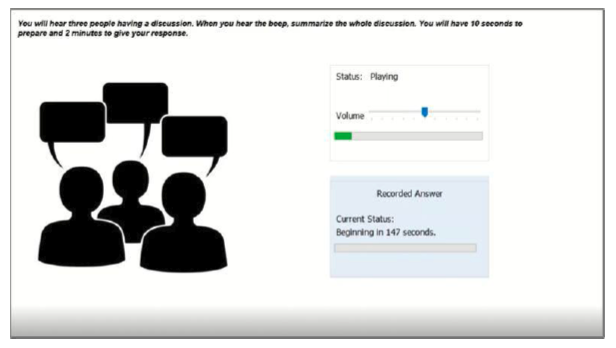
For Describe Image, Retell Lecture or Summarize Group Discussion, fluent delivery still needs to connect to the actual image or audio. If the content does not match the task, a smooth template is not enough. 对 DI、RL、SGD 来说,流利表达也必须和图片或音频内容对应。如果内容没有答到题目,只靠顺口模板是不够的。
Two details students often miss 两个最容易忽视的细节
First, word stress needs to be audible. Words such as important, population and accommodation should not sound flat from beginning to end. 第一,单词重音要真的被听出来。像 important、population、accommodation 这类词,不能每个音节都读得一样平。
Second, sentence stress and chunking matter. English is not usually spoken word by word with equal weight. You need meaning groups, key words and natural pauses. 第二,句子重读和意群停顿很重要。英文通常不是一个词一个词平均读出来的,而是有意群、关键词和自然停顿。
Fluency does not mean rushing 流利度不等于越快越好
Some students hear “oral fluency” and start reading too fast. That often creates more mistakes: swallowed endings, long self-corrections and sudden stops. 有些学生一听到 “oral fluency” 就开始加速。结果常常是吞词、反复修正、突然停住,错误反而更多。
A stronger speaking rhythm is moderate, steady and continuous. You should sound like you are producing a complete answer, not chasing every word in panic. 更稳的口语节奏是适中、稳定、连续。听起来应该像一个完整回答,而不是慌张地追每一个词。
Check the recording, not only the English 检查录音,不只检查英文
Use the same device to record 10 Read Aloud or Repeat Sentence responses. Check whether the volume is too low, whether the first word is cut off, whether the ending becomes too soft, and whether background noise is obvious. 用同一个设备连续录 10 组 RA 或 RS。检查音量是否太小、句首是否被吃掉、句尾是否越说越轻、背景噪音是否明显。
If your practice recording is unstable, the test-room version may become even less stable under pressure. 如果平时录音都不稳定,到了考场有紧张、噪音和设备位置变化时,表现可能更不稳定。
A better troubleshooting order 更实用的排查顺序
Check content first: did you read, repeat or describe the correct information? 先查内容:你读到、复述到、描述到的内容是否正确?
Then check fluency: are there long pauses, repeated starts or frequent corrections? 再查流利度:有没有长停顿、反复开头、频繁自我修正?
Then check pronunciation clarity: are stress, endings and key words clear? 再查发音清晰度:重音、词尾和关键词是否清楚?
Finally, check recording quality: can the response be heard clearly from beginning to end? 最后查录音质量:整段回答从开头到结尾是否都能清楚听见?
Final takeaway 总结
A low PTE Speaking score does not always mean your pronunciation is terrible. More often, the issue is a combination of content, fluency, stress, rhythm and recording stability. PTE 口语低分,不一定说明你发音很差。更常见的是内容、流利度、重音节奏和录音稳定性一起出了问题。
The goal is not to copy one accent. The goal is to speak clearly, steadily and meaningfully enough for the response to be understood. 目标不是模仿某一种口音,而是让你的输出足够清楚、稳定、有内容,让人和系统都容易理解。
Official links 官方链接
